Last Week i got this faboulous stamps on a monthly card!


 I decided to start with the Sunday Stamps Project, maybe i find some stamps from time to time :) This Weeks theme wasn't that hard to fulfill as the third theme from the europa stamps was handicrafts.



 |
| UKRAINE Issue Date: 12. March 2008 2.47G - multi coloured - correspondent with quill 3.33G - multicoloured - correspondent with computer |

 |
| LATVIA 26. April 2008 45(S) - multi coloured - letters 85(S) - multi coloured - hand with quill, ink pot |
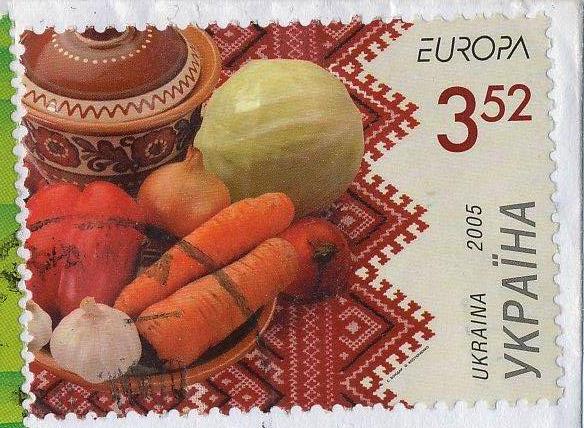 | |
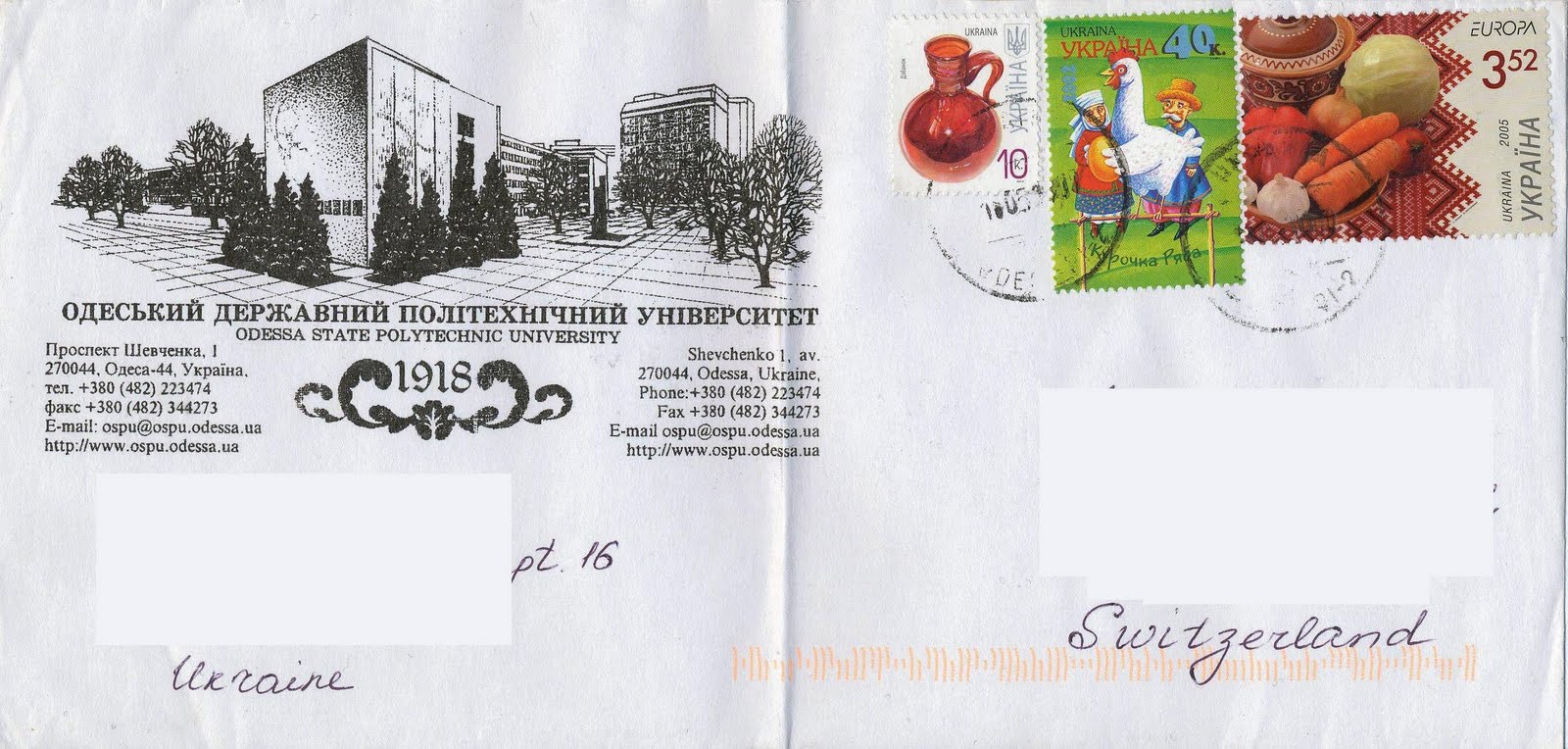
| UKRAINE Issue Date: 20. May 2005 3.52G - multi coloured - vegetables |
 |
| First Day Cover - Issue Date: 04.10.2011 |

An alluvial forest is a hardwood forest found on low levees, ridges and terraces with a high level of underground water within the floodplains of streams and rivers. This type of forest grows in areas that are slightly elevated above floodplain swamp and are usually flooded for a portion of the growing season. Formerly a normal biotope, it has been disappearing with the growing number of river realignment projects.
The largest alluvial forest in the Czech Republic grows at the confluence of the Morava and Dyje rivers. Residual alluvial forests can be found in the area of the confluence of the Labe and Cidlina rivers (Libický Alluvial Forest Natural Reserve), and on the banks or in the headwater area of the Morava and Dyje rivers.
The presence of a stream or river, or a high level of underground water leads to a lower amount of oxygen in the soil and subsequent reduction processes. The products of the processes contribute to the typical bluish colour and special smell of the so-called gley soil.
Primary trees found include poplar (Populus L.), oak (Quercus L.) , ash (Fraxinus L.) , elm (Ulmus L.) , alder (Alnus L.) , willow (Salix L.) , lime tree (Tilia L.) . Shrubs and small trees, such as cherry (Prunus serotina) , honeysuckle (Lonicera) , cornel (Cornel) , viburnum (Viburnum) , elder (Sambucus) , are present at places with more light.
The mix of plants found in alluvial forests depends on the shadow prevailing in the lower layers of the forest. Creepers, such as hop vine (Humulus lupulus) , try to penetrate into the upper layers. Other plants, such as ground ivy (Glechoma hederacea) , bramble (Rubus) , catchweed bedstraw (Galium aparine) , spread by vining stems.
Light-demanding herbs flowering before leaves bud on the surrounding trees give the forest so-called spring aspect. Spring snowflake (Leucojum vernum) , snowdrop (Galanthus nivalis) , lesser celandine (Ficaria verna) , yellow star-of-Bethlehem (Gagea lutea) , starwort (Stellaria holostea) , lungwort (Pulmonaria officinalis) , early-dog violet (Viola reichenbachiana) , hollowroot (Corydalis cava) , are among the herbs most commonly encountered in spring. A mix of grass species and other shadow-demanding herbs such as wild angelica (Angelica sylvestris) , true forget-me-not (Myosotis palustris) , yellow flag iris (Iris pseudacorus) , enchanter's-nightshade (Circaea lutetiana) , European birthwort (Aristolochia clematitis) , moneywort (Lysimachia nummularia) , creeping buttercup (Ranunculus repens) , common comfrey (Symphytum officinale) , common figwort (Scrophularia nodosa) , touch-me-not balsam (Impatiens noli-tangere) , cover the ground in summer.
The patchy mossy underground tends to cover maximum 10% of the forest floor.
Soil fauna in alluvial forests is relatively rare due to the high amount of water in the soil. Earthworms and harvestmen are among the most common species. Amphibians are frequent in wet areas. Birds typical of alluvial forest include yellow throat, different species of warbler, chaffinch, whitwing, robin, starling, stork, silver and night herons, bee eater, buzzard, kite, hawk, falcon, sea eagle.
 |
| BELGIUM 13. September 1958 2.50Fr - red 5Fr - blue |

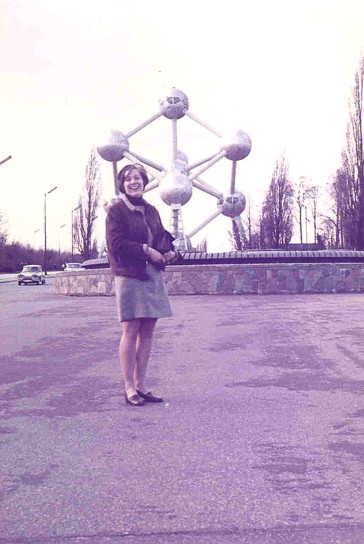
A seminal totem in the Brussels skyline; neither tower, nor pyramid, a little bit cubic, a little bit spherical, half-way between sculpture and architecture, a relic of the past with a determinedly futuristic look, museum and exhibition centre; the Atomium is, at once, an object, a place, a space, a Utopia and the only symbol of its kind in the world, which eludes any kind of classification.
The Atomium was the main pavilion and icon of the World Fair of Brussels (1958), commonly called Expo 58. It symbolised the democratic will to maintain peace among all the nations, faith in progress, both technical and scientific and, finally, an optimistic vision of the future of a modern, new, super-technological world for a better life for mankind.
The peaceful use of atomic energy for scientific purposes embodied these themes particularly well and, so, that is what determined the shape of the edifice. At 102 metres high, with its nine interconnected spheres, it represents an elementary iron crystal enlarged 165 billion (thousand million) times. It was dreamed up by the engineer André Waterkeyn (1917-2005). The spheres, though, were fitted out by the architects André and Jean Polak.
The Atomium was not intended to survive beyond the 1958 World Fair but its popularity and success soon made it a key landmark, first of Brussels then internationally.
Half a century later, the Atomium continues, for that matter, to embody those ideas of the future and universality. And, among other things through its cultural programming, it carries on the debate begun in 1958: What kind of future do we want for tomorrow? What does happiness depend on? from http://atomium.be/History.aspx?lang=en

 |
| http://www.motor-cycle-world-traveller.de/EURO-Reisen/67_brussels.JPG |
 | |||
| LUXEMBOURG 13. September 1985 2.50Fr - dark-rosa-karmin 3.50Fr - bluegreen 5Fr - türkisblue |
 |
| Registered Mail to Bern, posted on my Birthday - well i was still with the stars in this year :) Interesting: 1 Day from Luxembourg to Bern - that's quite fast for this time! |

 | |
| ITALY 13. September 1958 25L - orange - red 60L - blue |
 |
| wonderful foto from Rom 1958 found on this stunning page: http://alkmene51.blog.de/2010/06/19/urlaub-anno-8830312/ thank you very much for sharing your childhood memories with us! -> in german |

Estonia is extremely rich in forests – nearly half the territory of the country is covered with forests. Estonian forests belong to the mixed forests zone and the most widespread forest type is where evergreen conifers dominate, but there are also deciduous forests. Dozens of domestic species of trees and shrubs grow in the forests, the most common tree being the pine, followed by the birch and the spruce. The biggest forests in the country lie in the north eastern and central parts of Estonia. There are primeval virgin forests, sustainably managed forests as well as specially developed holiday forests. Estonia’s rich forests are home to numerous animals – it is quite common to meet rabbits, foxes or roe deer, and the biggest animal is the elk. The forests are home also for a number of species on the verge of extinction, such as the European mink, the dormouse and the flying squirrel. The forestry sector is an important pillar of the economy, timber being the most important renewable natural resource and wood processing a considerable source of livelihood. Today forests are called the green gold, but in olden days forests were considered a sacred place and the people worshipped sylvan spirits. copy from estonian post


 |
| Issue Date: 04.04.2011 |


